One of the federal government's largest scientific and technical libraries lives in a building 2,000 miles from Washington, D.C. Here, after passing through multiple security checkpoints, visitors will find J. Robert Oppenheimer’s office chair, the patent application for the Fat Man atomic bomb, the technical notebook of Soviet spy Oscar Seborer, and tens of millions (yes, millions) of other media that tell the story of Los Alamos National Laboratory.
Established in 2019, this library—the National Security Research Center (NSRC)—is staffed with research librarians, archivists, historians, data engineers, and knowledge managers who collect, curate, and organize data and information so that it is available to researchers when they need it.
In the era of stockpile stewardship—maintaining nuclear weapons without testing—access to historical weapons data is critical for the Lab’s current weapons scientists and engineers. “‘Historical data’ is not just historical; today’s stockpile depends upon it,” says NSRC Mission Support Group Leader Julie Maze. “Current weapons developers, engineers, and researchers lean on past knowledge to inform their current work and make informed decisions. They stand on the shoulders of their predecessors.”
Although customers can visit in person to access materials, the NSRC is not a stereotypical dusty archive. “It is a ‘living library’ whose personnel support the Lab’s national security mission by digitizing its collections and capturing the knowledge of subject matter experts,” Maze says. “The resulting data is then made accessible through artificial intelligence (AI) tools and systems, informing strategic outreach and learning for the Lab’s current and future workforce.”
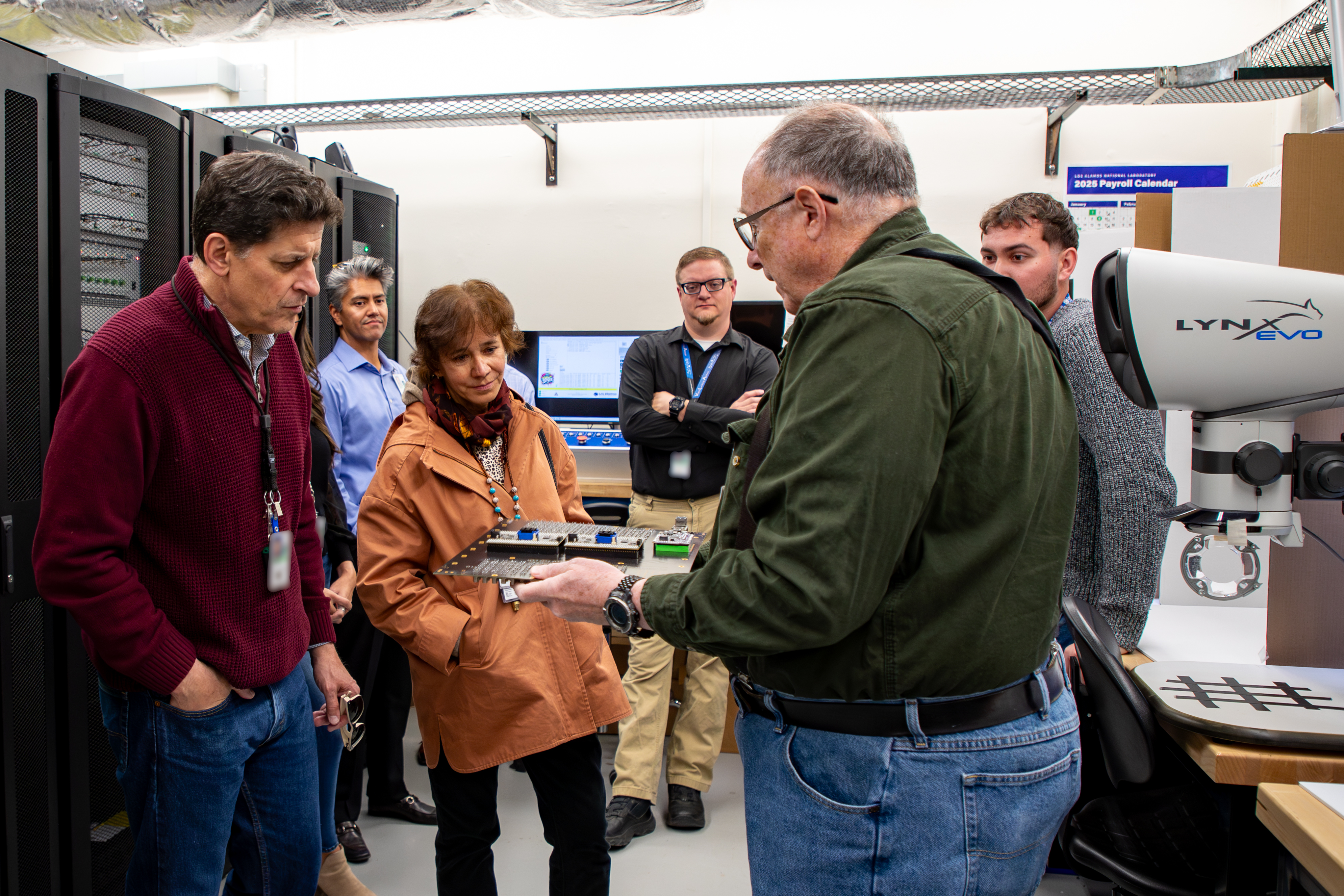
The right equipment is crucial to the NSRC’s mission. Recently, its Digital Collections group added a high-volume, high-speed scanner to its existing state-of-the-art facilities, significantly reducing processing time for the NSRC’s volume of physical records without compromising the image quality necessary for AI-enabled search tools and document processing. A pilot project saved 36 hours of staff labor in scanning the contents of six records boxes; once its settings are fine-tuned, the new scanner is expected to provide the same throughput as 8 to 10 regular paper scanners.
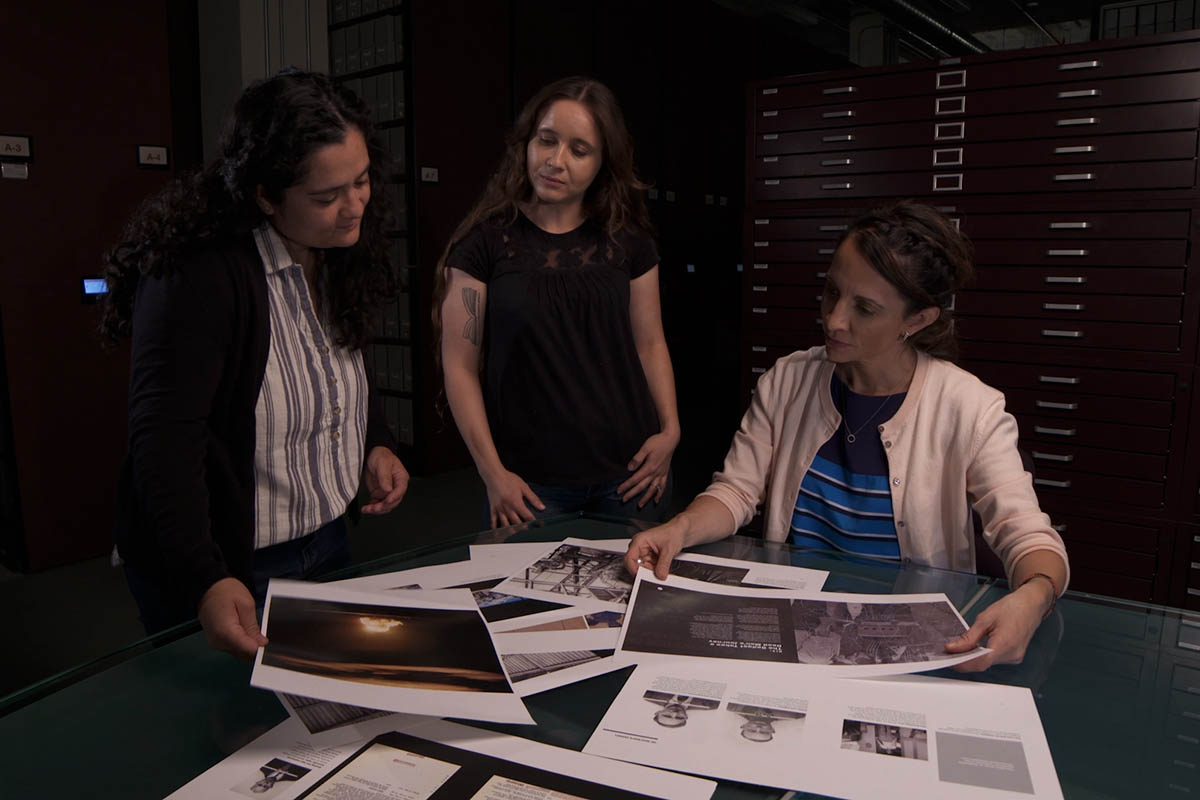
Nanette Mayfield, Digital Collections group leader, underscores the importance of her team’s work in curating the NSRC’s irreplaceable trove of data and information. “Our group is responsible for ensuring the protection and accessibility of these materials through digitization, making them findable, interoperable, and reusable,” she says. “State-of-the-art equipment like our new scanner will allow bulk digitization much faster and with higher quality than currently practical.”
With collections growing each year as items are discovered, donated, or cultivated, the NSRC’s herculean task to transform its holdings into discoverable data lies at the heart of the Lab’s Weapons Research Services division. For Division Leader Jason Kritter, the crux of the NSRC’s mission is “to serve as a core competency of Los Alamos by providing researchers with vital knowledge for today’s national security mission and tomorrow’s discoveries.” ★
Watch the NSRC Digital Collections teams at work in this five-minute video.